



Behavioural Enrichment for Small Mammals
If you’ve landed on this page, chances are you’re already doing a great job as a pet parent. Your furry (or fluffy!) friend probably gets quality food, cosy bedding, and the occasional treat. But here’s the thing: life isn’t just about the basics. It’s also about enjoyment, stimulation, and self-expression.
In this article we will focus on behavioural enrichment for small mammals and how it can help your pet live a happier, more fulfilling life. We’ll look at top 5 areas of enrichment and why they matter, and we’ll explore some easy ways to start enriching your pet’s life right now (most won’t cost you a penny!).
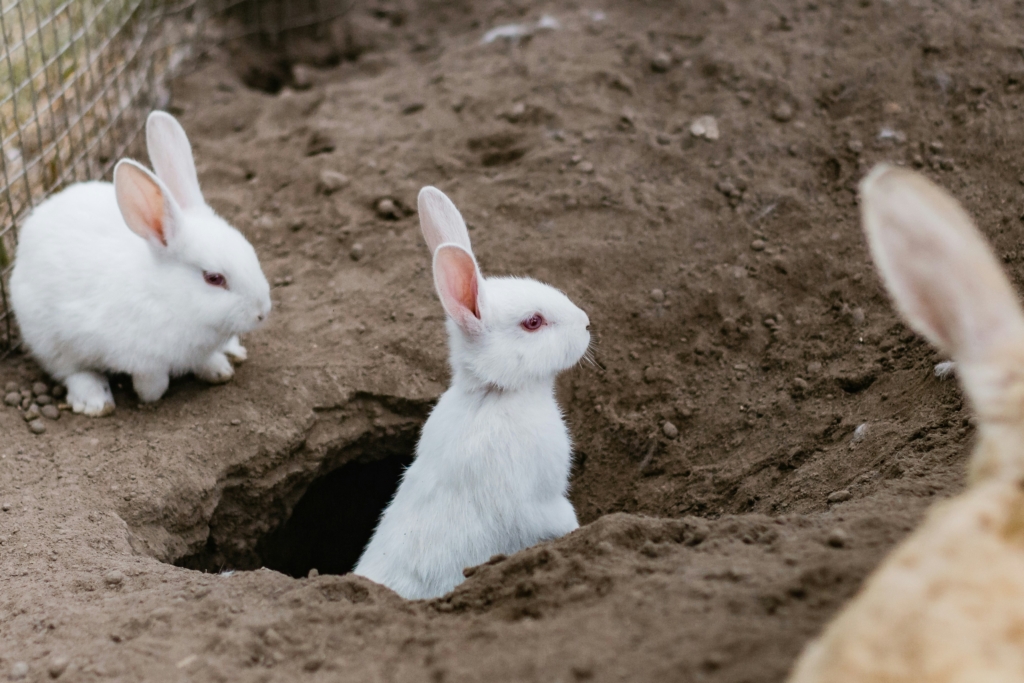
Why Enrichment Matters
Behavioural enrichment is all about identifying and creating an environment that provides all the necessary stimuli for the optimal psychological and physiological well-being of your pet. It means expanding the number and complexity of the behaviours they express, which has several beneficial effects:
- It enhances the quality of life of your pet
- Your pet is more active and engaged
- Your pet will stay calmer in stressful situations
- It provides the mental stimulation that your pet deserves
- Your pet will show fewer unwanted behaviours
Think of it as boosting the mental and physical health of your pet.
For small mammals in particular, enrichment is as important as nutrition and veterinary care.
When Boredom Becomes a Problem
We’ve all been bored before, and we know it’s not the end of the world. But imagine your pet’s daily life: same space, same food, no TV, no Instagram feed to scroll.
Chronic boredom can lead to behavioural and even medical problems, for example:
- Overgrooming and self mutilation
- Aggression in stressful situations
- Restlessness or pacing
- Cage chewing or other stereotypical behaviours (repetitive behaviours without a purpose)
- Timidity or withdrawal
- Obesity or weight loss due to stress, boredom, lack of stimulation, and general inactivity
So how can you make sure that your pet doesn’t get too bored?
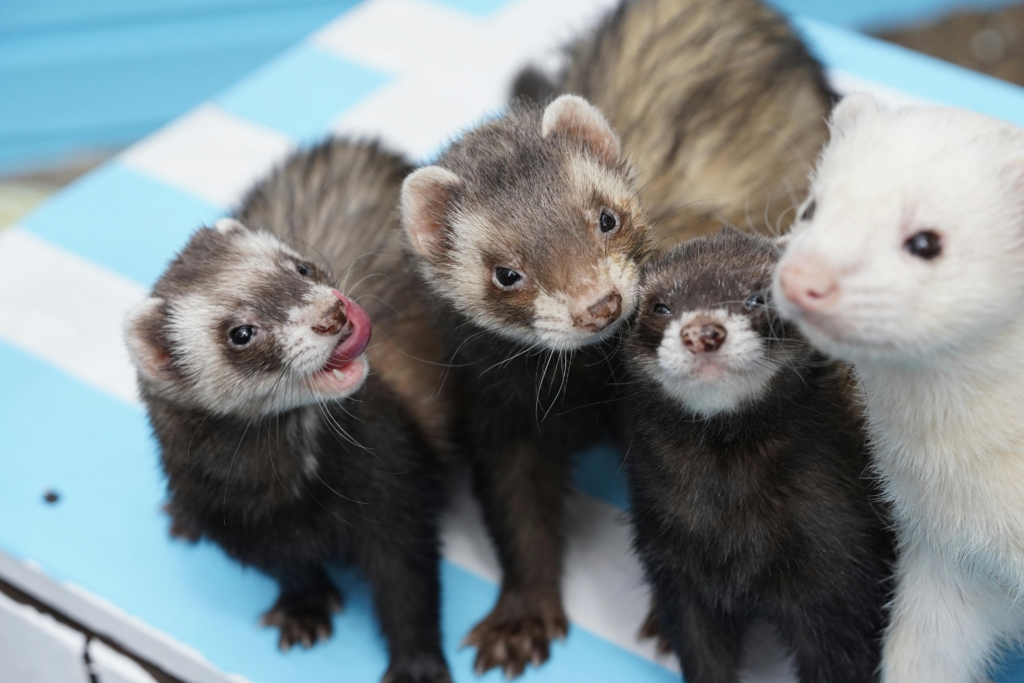
5 Key Areas of Behavioural Enrichment for Small Mammals
When thinking about keeping your pet happy and busting boredom, there are different key areas where you can make a difference. Overall, behavioural enrichment works best when it’s tailored to your pet, so make sure to take their species and personality into consideration.
1. Social Enrichment
Although it’s generally considered the most effective form of enrichment, it’s not ideal for every pet. Some animals are happier on their own, whilst others need company to thrive.
- Not social: Hedgehogs, hamsters
- Flexible: Ferrets (can live in groups or alone, if given enough human interaction)
- Social: Rabbits, guinea pigs, degus, chinchillas, rats, mice
2. Physical Enrichment
This refers to setting up an environment that encourages natural movement and behaviour, such as digging, climbing, hiding, chewing. Providing physical spaces that reflect these needs will make your pet feel safer and happier, for instance:
- Rabbits: Give them a digging box, a tunnel system or a step to sit on
- Ferrets: Offer hammocks, tubes, and hideouts
- Chinchillas and degus: Add climbing shelves, a dust bath, a wheel and safe chew items
3. Nutritional Enrichment
Food is more than just fuel: it can be a way for your pet to have fun, too!
- Offer a variety of healthy, species-appropriate treats
- Scatter food or hide it in puzzle toys to make your pet forage/hunt for it
- Hang hay or herbs with clothes pegs for rabbits and guinea pigs (guinea pigs don’t lift their head as much as rabbits so be careful to hang it at a low level)
- Grow wheatgrass at home for your herbivores
4. Sensory Enrichment
Stimulate your pet’s senses with new sights, smells, tastes, and textures. For example:
- Toys of different materials and shapes
- Safe herbs like mint, chamomile, or parsley
- Novel (non-toxic) items to explore under supervision
5. Occupational Enrichment
Give your pet opportunities to solve problems, learn new skills and move around to achieve a goal. You can do so through:
- Puzzle feeders
- Training sessions for tricks or obedience (you’ll be surprised how much your pet can learn!)
- Maze boxes or treasure hunts for treats
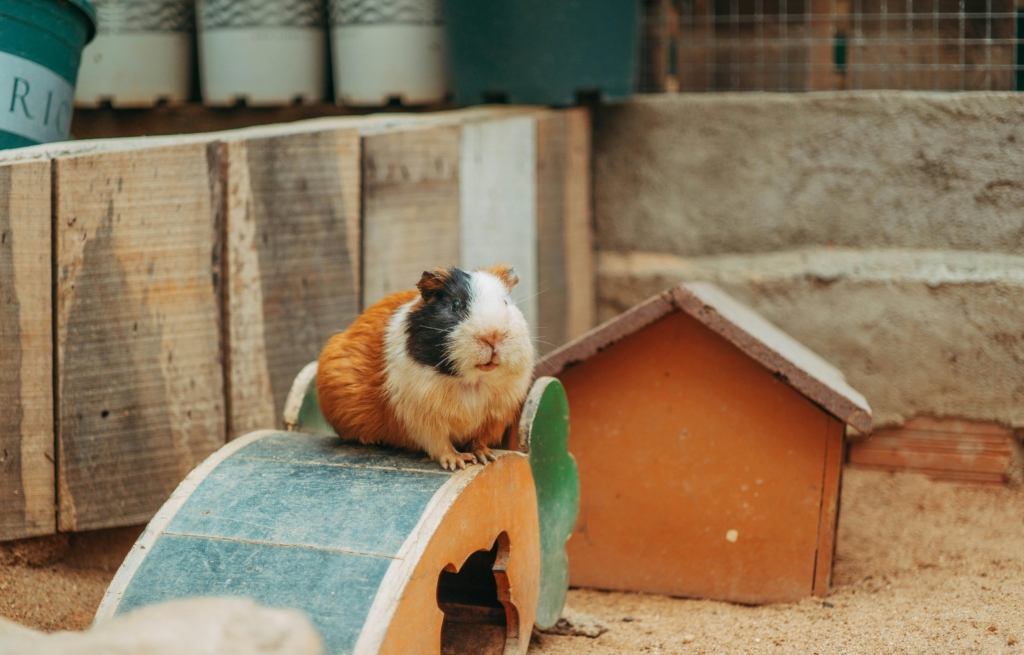
Easy Enrichment Ideas to Try
As mentioned before, there are many ways to ensure the behavioural enrichment of your small mammal. Here are some quick and safe ideas that work for many small pets.
- Place treats in a bowl covered with paper and let your pet work out how to uncover it. You can tie the paper with hemp/sisal rope.
- Stuff a cardboard box with shredded paper and hide snacks or toys for your pet to find.
- Hide treats in a puzzle ball and let your pet have fun with it.
- Build tunnels, mazes, and hideouts with cardboard boxes and tubes.
- Fill a tray with soil or shredded paper if your pet loves digging.
- Create a DIY hay feeder from a toilet roll tube and provide fresh wheatgrass pots for your herbivore.
- Fill a shallow tray with water and add floating ping-pong balls for your ferret, as well as provide tunnels and hammocks.
Safety First
⚠️ Always choose materials that are safe for your pet’s species.
⚠️ Make sure to supervise your pet the first time they try something new, and introduce changes gradually to avoid stress.
⚠️ Unwaxed paper and cardboard boxes are safe for most animals even when chewed in small amounts.
⚠️ Fabric can be harmful when chewed and ingested, so pay extra attention.